
LONG-LASTING COATINGS
PROTECTING BUILDINGS & PLANET

Buildings Are Under Attack From Weather, Hazards & Aging
Green ENCASEMENT Coatings
Create Long-Lasting Protection Against All of It
Defending What You Have For Decades So You Don’t Have to Replace It


Insider's Guide Stopping Secondary Exposure From Disasters
Thursday, March 14, 2024

Listen and Learn: Dive into the Audio Version of Our Blog
In the aftermath of natural or man-made disasters, the need for effective cleanup becomes paramount.
However, amidst the urgency, the prevention of secondary exposure often takes a backseat.
This negligence can have dire consequences for both human health and the environment.
Lessons learned from past disasters, such as Fukushima, emphasize the critical importance of proactive measures, particularly the use of the right green coatings, in preventing secondary exposure.
In this episode I bring to light how disasters leave behind a trail of hazardous debris containing heavy metals, asbestos, volatile organic compounds (VOCs) and many other toxic substances.
These substances pose significant health and environmental risks, especially when they become airborne or contaminate water sources.
The immediate containment and control of this toxic debris are essential to preventing harmful, secondary exposure.
One effective method to prevent secondary exposure is the use of the right green coatings.
These green coatings serve as a barrier, encasing hazardous materials and preventing their release into the environment.
By effectively sealing the debris, the right green coatings minimize the risk of exposure to workers, waterways, and surrounding areas.
The importance of proactive waste management cannot be overstated.
Effective debris management not only reduces the risk of secondary exposure but also minimizes costs, environmental impact, and risks to workers.
By implementing control and management measures on-site, during cleanup and disposal, the migration of toxic debris can be halted, safeguarding both public health and the environment.
However, waste management remains a weak aspect of disaster recovery efforts.
The lack of standard measures and regulatory infrastructure hinders effective management of the vast volumes of toxic waste generated.
Investing in modern approaches and international collaboration is crucial to address this gap and improve disaster response strategies.
Moreover, the communication gap extends beyond local boundaries to international issues.
Knee-jerk reactions and a lack of informed decision-making can undermine preventative measures and worsen secondary exposure risks.
Learning from past disasters and adopting a proactive approach is essential to mitigate future risks and protect communities from the devastating consequences of secondary exposure.
The role of the right green coatings in disaster cleanup cannot be overstated.
For over 30 years, companies like GEI (Global ENCASEMENT, Inc.) have demonstrated the effectiveness of the right green coatings in sealing and controlling hazardous materials and preventing harmful and sometimes deadly secondary exposure.
By incorporating the right green coatings into disaster response plans, communities can enhance their resilience and minimize the long-term health and environmental impacts of disasters.
Information Points:
•Proactive use of the right green coatings crucial in disaster cleanup to prevent secondary exposure.
•Lessons from past disasters like Fukushima highlight the importance of waste management.
•Hazardous debris containing heavy metals and asbestos poses significant health risks.
•The right green coatings act as a barrier, encasing hazardous materials and preventing environmental release.
•Effective debris management minimizes costs, environmental impact, and risks to workers.
•Investing in modern approaches and international collaboration essential for improved disaster response.
•Companies like GEI have demonstrated the effectiveness of the right green coatings for over 30 years.
To Sum It Up
Preventing secondary exposure is paramount in disaster cleanup efforts.
The proactive use of the right green coatings serves as a critical line of defense against the release of hazardous materials into the environment.
By prioritizing waste management and adopting modern approaches, we can minimize risks, reduce costs, and safeguard the health and well-being of both present and future generations.
“We cannot stop natural disasters but we can arm ourselves with knowledge: so many lives wouldn't have to be lost if there was enough disaster preparedness.” - Petra Nemcova - Czech Model, Television Host, & Philanthropist
What are your questions?
We are always here to help and excited to answer them.
Contact us at +1 (800) 266-3982 , or send us an email at service@encasement.com and leave a comment below.
See other posts like this one:










Friday, June 07, 2024
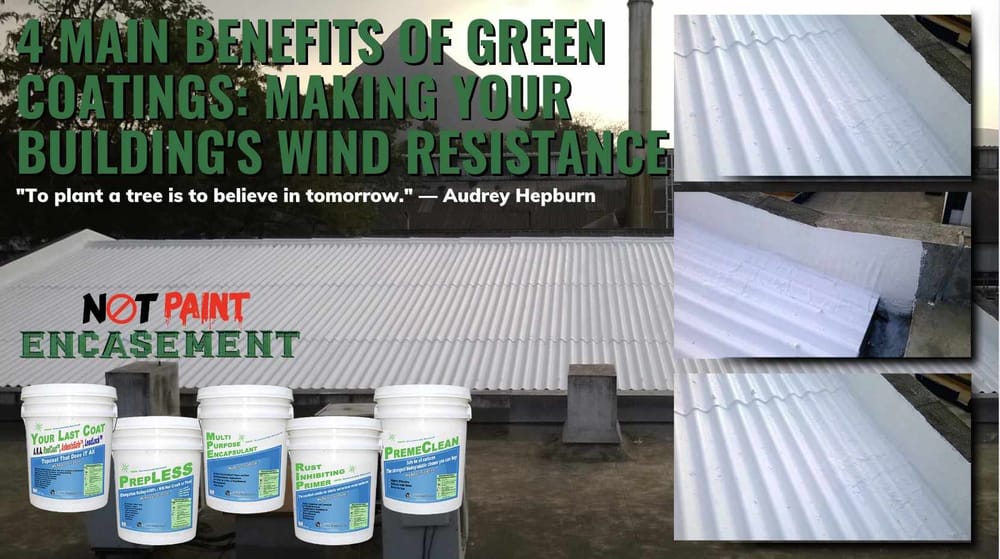
4 Main Benefits of Green Coatings: Making Your Building's Wind Resistance

© Copyright 2026 Global ENCASEMENT, Inc. | ALL Rights Reserved