
LONG-LASTING COATINGS
PROTECTING BUILDINGS & PLANET

Buildings Are Under Attack From Weather, Hazards & Aging
Green ENCASEMENT Coatings
Create Long-Lasting Protection Against All of It
Defending What You Have For Decades So You Don’t Have to Replace It


Solar Reflective Surfaces - Thermal Emittance
Monday, July 10, 2023
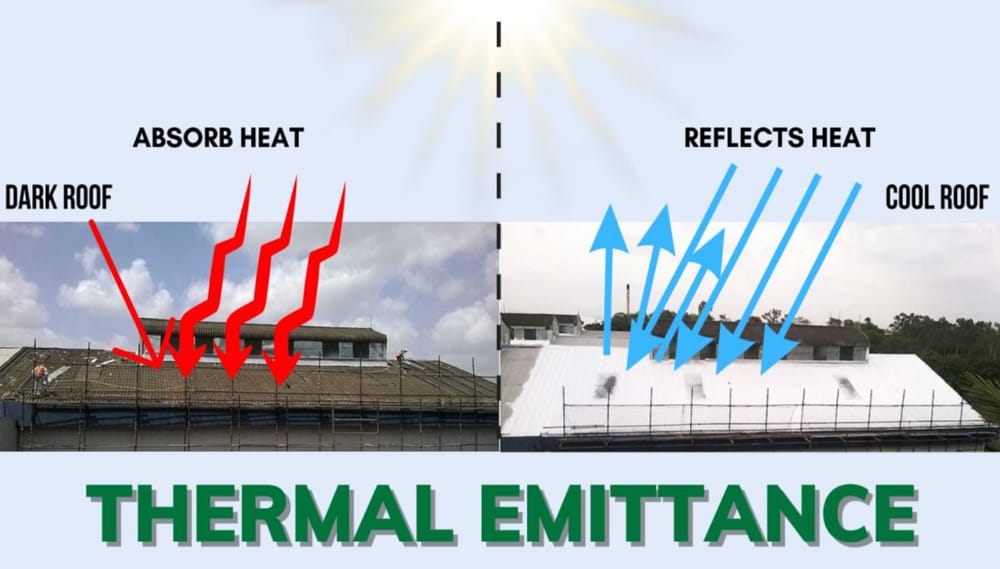
Unleashing the Power of Thermal Emittance
Exploring the Significance in Reducing Heat Transfer
In the quest for energy efficiency and sustainable living, the importance of thermal emittance cannot be overstated.
Thermal emittance refers to the ability of a material's surface to emit thermal radiation efficiently.
By effectively managing heat transfer, thermal emittance plays a crucial role in improving energy conservation and reducing the environmental impact of various applications.
In this blog, I’ll delve into the significance of thermal emittance, evaluate the effectiveness of environmental coatings in enhancing emittance, and highlight successful applications that showcase its power.
The Significance of Thermal Emittance
Reducing heat transfer is vital in numerous contexts, ranging from building insulation to aerospace engineering.
Thermal emittance provides a solution by allowing surfaces to radiate heat energy efficiently.
When a material has high emittance, it absorbs less heat from its surroundings and emits more thermal radiation.
This leads to lower surface temperatures, minimizing the need for additional cooling methods, such as air conditioning, and reducing energy consumption.
In building construction, materials with high thermal emittance help regulate indoor temperatures, leading to improved comfort and reduced reliance on heating and cooling systems.
Moreover, by reducing the heat island effect in urban areas, thermal emittance can mitigate the adverse environmental impacts of urbanization, such as increased energy consumption and air pollution.
Enhancing Emittance through Environmental Coatings:
Environmental coatings play a crucial role in enhancing thermal emittance.
These coatings are designed to improve a material's surface properties, including its ability to emit thermal radiation effectively.
By applying such coatings, the emittance of various surfaces can be significantly increased, resulting in more efficient heat management.
One widely used environmental coating is cool roof coatings. These coatings have high solar reflectance, which helps reduce the absorption of solar radiation and subsequently lowers surface temperatures.
By reflecting a larger portion of sunlight, cool roofs effectively minimize heat transfer to the building, reducing the need for cooling systems and energy consumption.
Another class of coatings that enhances emittance is infrared-reflective coatings. These coatings selectively reflect infrared radiation while allowing visible light to pass through.
This unique property helps to keep surfaces cooler by minimizing the absorption of infrared heat energy.
In turn, this reduces heat transfer to the surroundings and improves energy efficiency.
Successful Applications of Thermal Emittance
Numerous successful applications demonstrate the power of thermal emittance in different industries.
One notable example is the use of cool roofs in large urban areas. By applying cool roof coatings to buildings, cities can mitigate the urban heat island effect and decrease overall energy consumption.
For instance, Many cities like New York & Los Angeles has implemented cool roof programs, resulting in significant energy savings and improved urban microclimates.
In the aerospace industry, thermal emittance plays a critical role in spacecraft design.
Spacecraft often experience extreme temperature variations, and effective heat management is crucial to their operation.
By utilizing materials with high emittance, such as specialized coatings or thermal control paints, spacecraft can regulate internal temperatures more efficiently, ensuring the reliability of sensitive equipment and systems.
Furthermore, thermal emittance is crucial in the manufacturing sector. By employing high-emittance materials or coatings on industrial equipment, heat transfer can be minimized, reducing energy waste and improving overall operational efficiency.
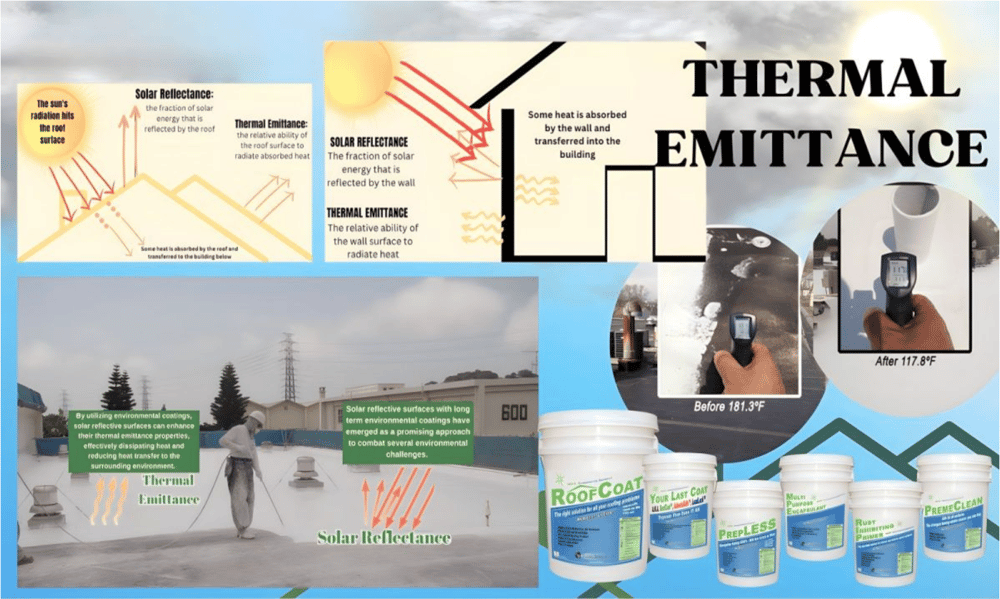
This is especially true with Roofing
The importance of thermal emittance in reducing heat transfer cannot be underestimated.
By utilizing materials and coatings with high emittance, we can enhance energy efficiency, reduce reliance on cooling systems, and mitigate the adverse effects of heat build-up.
Successful applications of thermal emittance, such as cool roofs in urban areas and heat management in spacecraft, showcase the power of this concept in diverse contexts.
As we continue to strive for sustainability and energy conservation, unleashing the potential of thermal emittance will undoubtedly play a pivotal role in shaping a greener future.
In my next blog continuing with the different categories of Solar Reflective Surfaces I’ll be writing about the important subject of Passive Cooling.
So stay tuned to learn more about this valuable information and how it may directly affect you while we all embrace sustainable living.
George C. Keefe/Encasement Guy
See other posts like this one:











© Copyright 2026 Global ENCASEMENT, Inc. | ALL Rights Reserved