
LONG-LASTING COATINGS
PROTECTING BUILDINGS & PLANET
Buildings Are Under Attack From Weather, Hazards & Aging
Green ENCASEMENT Coatings
Create Long-Lasting Protection Against All of It
Defending What You Have For Decades So You Don’t Have to Replace It


Paradise in Peril & Midway's Toxic Lead Legacy
Monday, June 24, 2024
Listen and Learn: Dive into the Audio Version of Our Blog
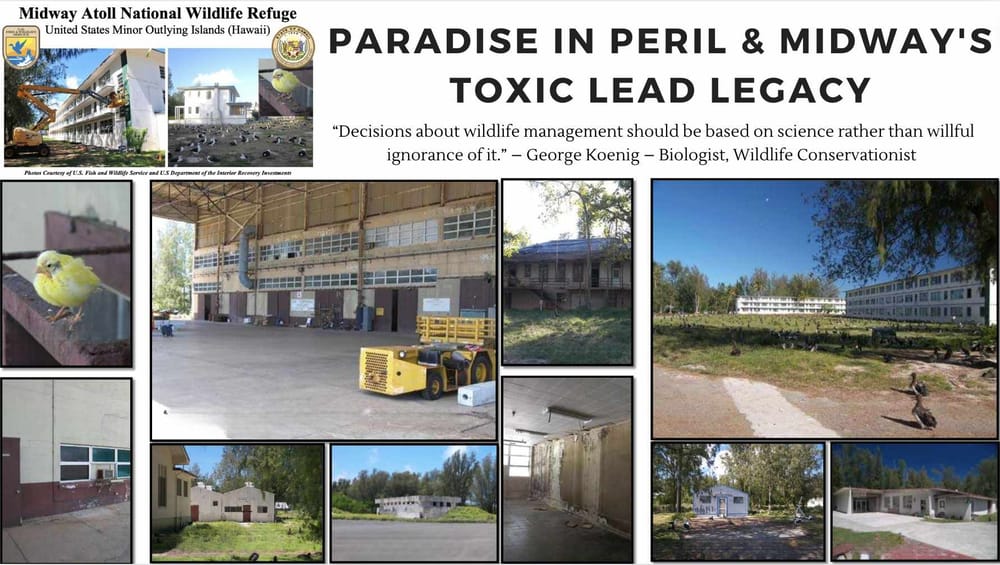
Nestled in the vast expanse of the Pacific Ocean, Midway Atoll National Wildlife Refuge stands as a testament to nature's resilience and human history.
This remote sanctuary, part of the United States Minor Outlying Islands, has long captured the imagination of conservationists and history buffs alike.
However, beneath its pristine exterior lies a troubling secret – a toxic legacy that threatens the very wildlife it aims to protect.
For decades, Laysan albatross chicks on Sand Island have been exhibiting symptoms of lead toxicity.
The culprit?
Lead-based paint (LBP) chips from buildings dating back to the early 1900s.
In this episode I reveal how this silent menace has not only contaminated the soil but also posed a significant risk to the island's delicate ecosystem.
The U.S. Fish and Wildlife Service (FWS) faced a daunting challenge: how to preserve the island's historic structures while safeguarding its precious wildlife.
Enter Global Encasement Inc. (GEI), a 30-year old company with a worldwide track record would prove instrumental in tackling this environmental crisis with its award winning coatings.
Their innovative approach to lead encasement offered a ray of hope for Midway Atoll's future.
But before we delve into the solution, let's explore the magnitude of the problem and the unique constraints faced by conservationists on this remote outpost.
Midway Atoll is no ordinary wildlife refuge.
Home to eight endangered species and countless others of concern, it's a haven for biodiversity.
The island also boasts a rich history, with 69 buildings, structures, and objects eligible for the National Historic Register.
These landmarks tell the story of colonization, military operations, and the pivotal Battle of Midway during World War II.
Preserving this heritage while ensuring the safety of the island's inhabitants presented a complex challenge.
By 2010, the FWS had already spent approximately $841,000 in direct costs to remediate 24 of the 95 buildings with LBP.
The task was far from complete, and the need for a long-term, cost-effective solution was paramount.
This is where Global Encasement Inc.'s proven and guaranteed products came into play, offering a unique set of benefits that aligned perfectly with the refuge's needs.
The company's proven LeadLock™ coating system was selected to encase the lead-based paint on seven historic officer quarters and other buildings.
Why?
Its durability, resistance to salt sea spray and damaging UV rays, non-toxic nature, and super compliant low VOCs made it an ideal choice for this sensitive environment.
But the benefits didn't stop there.
LeadLock™'s bright white color boasts an impressive 83% solar reflectance, contributing to reduced cooling costs – a significant advantage on an island reliant on limited resources.
The coating system's ability to minimize surface preparation and reduce hazardous waste generation further cemented its position as the go-to solution for Midway Atoll's lead problem.
In total, 3,245 gallons of Global Encasement Inc.'s products were used to encase approximately 130,000 square feet of surface area.
This massive undertaking not only addressed the immediate lead hazard but also provided a 20-year guaranteed system, ensuring long-term protection for both wildlife and historic structures.
The success of this project extends beyond mere numbers.
It represents a harmonious blend of environmental stewardship, historic preservation, and innovative technology.
Global Encasement Inc.'s environmental solution aligns perfectly with various federal guidelines and executive orders, including the Historic Sites, Buildings and Antiquities Act, the National Historic Preservation Act of 1966, and Executive Order 11593 on the Protection and Enhancement of the Cultural Environment.
Moreover, the company's products comply with stringent environmental regulations, such as Executive Order 13423 for Energy Efficiency and Pollution Prevention and the Resource Conservation and Recovery Act (RCRA) of 1976.
This compliance ensures that the remediation efforts at Midway Atoll not only solve the immediate lead problem but also contribute to broader goals of sustainability and environmental protection.
As we reflect on the transformation of Midway Atoll National Wildlife Refuge, it's clear that the challenges faced were monumental.
The toxic legacy of lead-based paint threatened to undermine decades of conservation efforts.
However, through innovative solutions like those provided by Global Encasement Inc., we see a path forward – one that balances the preservation of history with the protection of fragile ecosystems.
To Sum IT Up:
The story of Midway Atoll serves as a powerful reminder of our responsibility to address the environmental sins of the past while safeguarding our natural heritage for future generations.
It demonstrates that with ingenuity, commitment, and the right technologies, we can overcome even the most daunting environmental challenges.
As Midway Atoll continues to thrive, safer from the presence of lead toxicity, it stands as a beacon of hope for similar conservation efforts around the world.
“Decisions about wildlife management should be based on science rather than willful ignorance of it.” – George Koenig – Biologist, Wildlife Conservationist
What are your questions?
We are always here to help and excited to answer them.
Contact us at +1 (800) 266-3982 , or send us an email at service@encasement.com and leave a comment below.
See other posts like this one:

Tuesday, September 12, 2023
Managing Debris After Earthquake Disasters: Safeguarding Lives and Health

Monday, September 11, 2023
9/11 & Managing Hazards in the Aftermath of Disasters: A Sensitive Approach


Wednesday, September 06, 2023
Fortify Your Future: Protecting Your Property in an Age of Climate Uncertainty & Insurance Coverage Retreat

Tuesday, September 05, 2023
Prayers Are Being Answered: A Hopeful Perspective on Combating Climate Change


Thursday, August 31, 2023
Unlocking a Greener Tomorrow: The Economic Advantages Embracing New Opportunities of Green Coatings Encasement

Wednesday, August 30, 2023
New Opportunities with Sustainable Solutions for Post-Wildfire Debris Management
Friday, August 18, 2023
Montana Landmark Climate Lawsuit: Paving the Way for Environmental Change
Wednesday, August 16, 2023
From Fukushima to Lahaina: Global Encasement's Impactful Journey in Disaster Cleanup
Monday, August 07, 2023
Best Practices: Integrating Solar Reflective Surfaces and Environmental Coatings


© Copyright 2026 Global ENCASEMENT, Inc. | ALL Rights Reserved