
LONG-LASTING COATINGS
PROTECTING BUILDINGS & PLANET

Buildings Are Under Attack From Weather, Hazards & Aging
Green ENCASEMENT Coatings
Create Long-Lasting Protection Against All of It
Defending What You Have For Decades So You Don’t Have to Replace It


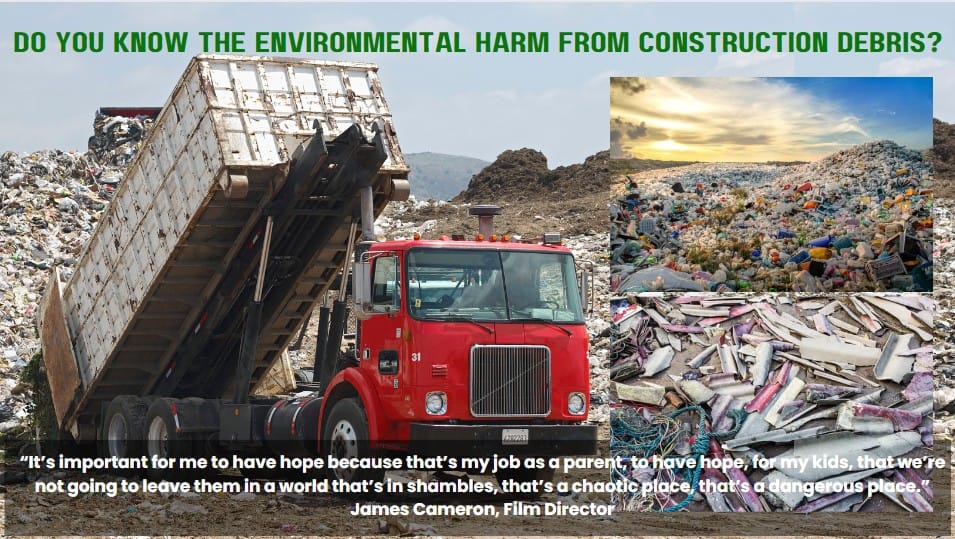
Do You Know The Environmental Harm From Construction Debris?
Friday, February 09, 2024
Landfills and dumps stand as ugly reminders to our consumption-driven society, but their harmful impact on the environment goes beyond mere eyesores.
Listen and Learn: Dive into the Audio Version of Our Blog
Landfills and dumps stand as ugly reminders to our consumption-driven society, but their harmful impact on the environment goes beyond mere eyesores.
Construction debris, especially roofing materials, constitutes a significant portion of the waste stream, increasing pollution of our lands, groundwater, and air.
In this episode, I address the environmental backlash of landfills, particularly focusing on the alarming contribution of construction waste, with a spotlight on roofing materials.
The Environmental Toll of Landfills:
Landfills are vast repositories of human waste, comprising everything from household trash to industrial byproducts.
As these sites grow, they emit harmful gases such as methane, a potent greenhouse gas that contributes to climate change.
Moreover, leakage from decomposing waste can contaminate groundwater, posing serious health risks to nearby communities and ecosystems.
Construction Debris: A Hidden Culprit:
Among the many items discarded in landfills, construction debris holds a notable place.
The construction industry generates a staggering amount of waste, with estimates suggesting that it accounts for a significant percentage of landfill volume.
This waste includes materials like concrete, wood, plastics, metals and especially offensive asphalt and coal tar based products, all of which take decades or even centuries to decompose fully.
The U.S. produces 268 million tons of waste each year,
Roofing's Unseen Impact:
Roofing materials, in particular, constitute a substantial portion of construction waste.
From asphalt shingles to metal panels, the materials used in roofing contribute significantly to landfill accumulation.
Asphalt shingles and roll roofing, especially nasty common roofing materials, contain petroleum-based products that release harmful chemicals as they degrade, further contaminating the environment.
Industry experts estimate that asphalt shingles take between 300-400 years to fully decompose.
Shingles are dense and take up a lot of room, resulting in the loss of space for other types of waste.
They also can leech toxic chemicals into groundwater supplies that can be carcinogenic.
The Environmental Hazards of Roofing Waste:
Roofing debris poses a slew of untold environmental hazards.
When disposed of in landfills, these materials not only occupy valuable space but also release pollutants into the air and soil.
Moreover, runoff from rainwater can carry contaminants from roofing materials into nearby waterways, disrupting aquatic ecosystems and compromising water quality.
This toxic runoff also seeps into the groundwater and travels bringing everlasting hazards.
Combatting the Crisis:
To mitigate the environmental impact of roofing waste and construction debris, concerted efforts are needed at various levels.
This includes promoting sustainable construction practices, such as using eco-friendly, biodegradable materials, overall green products and implementing recycling programs for construction waste.
Additionally, initiatives to reduce overall waste generation and promote circular economy principles can help alleviate the burden on landfills.
Summing It Up:
Green Coatings Encasement as the Logical Solution:
In the face of such environmental degradation, it's imperative to seek solutions that not only address the problem but also provide sustainable alternatives.
One such solution lies in the application of the right green coatings encasing structures, buildings, and roofs.
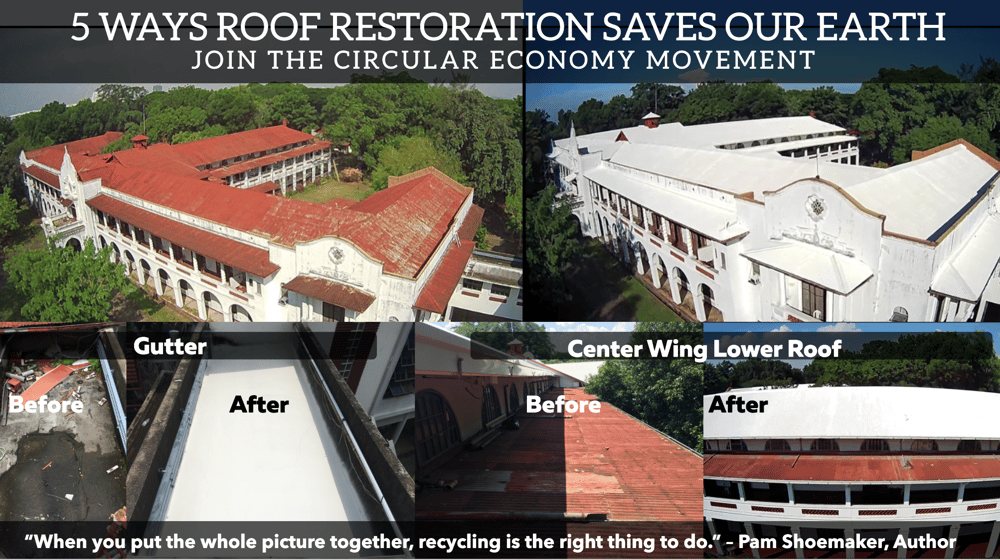
So instead of removing and replacing - the practice should be to embrace the new opportunity to restore, fortify and preserve all of these surfaces with the right green coatings, extending their lifespan well into the future.
This innovative approach not only gives new life and strength to existing structures but just as importantly reduces the generation, transportation and storage of unwanted, harmful construction waste.
By encasing structures, buildings and roofs with the right eco-friendly, green coatings, we not only extend their lifespan but also minimize the environmental footprint associated with traditional construction and roofing materials.
In addition we reduce the abuse of our precious natural resources that are needed for replacement materials while at the same time minimizing our carbon footprint.
With easy application the right, long term, green coatings offer a new opportunity for a logical and simple solution to the environmental crisis caused by construction debris.
This is one of the many approaches we can use to pave the way towards a more sustainable future where our planet's health is prioritized for generations to come.
“It’s important for me to have hope because that’s my job as a parent, to have hope, for my kids, that we’re not going to leave them in a world that’s in shambles, that’s a chaotic place, that’s a dangerous place.” - James Cameron, Film Director
What are your questions?
We are always here to help and excited to answer them.
Contact us at +1 (800) 266-3982 , or send us an email at service@encasement.com and leave a comment below.
See other posts like this one:





© Copyright 2026 Global ENCASEMENT, Inc. | ALL Rights Reserved