
LONG-LASTING COATINGS
PROTECTING BUILDINGS & PLANET

Buildings Are Under Attack From Weather, Hazards & Aging
Green ENCASEMENT Coatings
Create Long-Lasting Protection Against All of It
Defending What You Have For Decades So You Don’t Have to Replace It


California's Groundbreaking Code Update: A Leap Towards Reducing Embodied Carbon Emissions
Tuesday, October 17, 2023
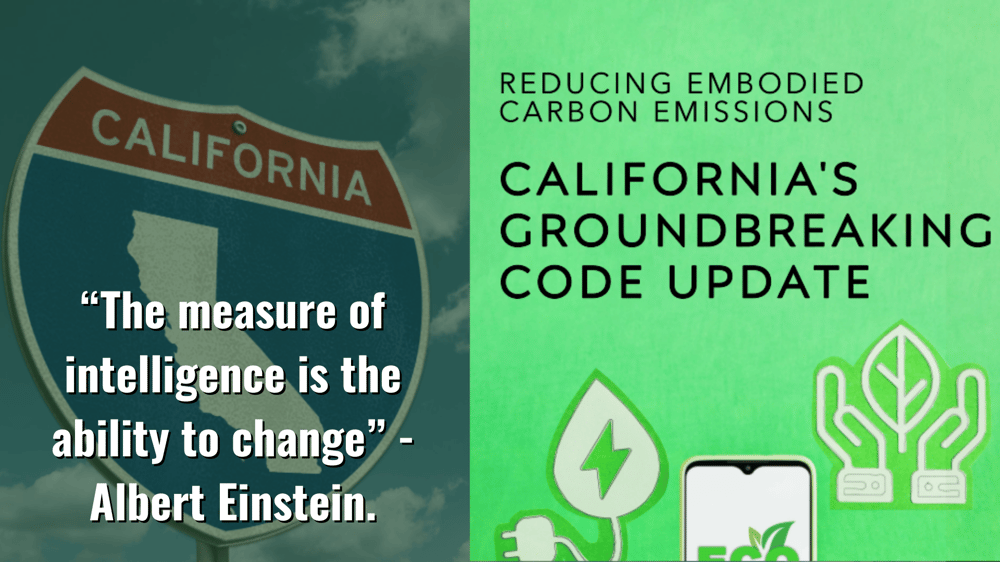
In a pivotal move towards sustainability, California is set to implement significant changes to its building codes, with the goal of curbing embodied carbon emissions.
These changes, scheduled to come into effect in July 2024, mark a crucial milestone in the state's relentless pursuit of decarbonization.
Embodied carbon is a unseen culprit and often overlooked in building policies, represents the emissions stemming from various stages of a building's life cycle, including manufacturing, transportation, installation, maintenance, disassembly, and waste disposal of construction materials.
This issue has largely evaded scrutiny due to the intricate nature of material supply chains, technological challenges in decarbonization, and the absence of standardized data.
However, if left unaddressed, embodied carbon is poised to escalate alongside the building sector's overall emissions.
California, one of my home states, has a rich history of pioneering building codes, beginning with the introduction of an energy code in the 1970s.
In the last decade, it has further cemented its status as a sustainability trailblazer with the statewide CALGreen building code.
The Golden State is now poised to extend its legacy by becoming the first state to legislate a reduction in embodied carbon emissions.
There are now two pathbreaking building code changes scheduled for implementation.
On July 1, 2024, the two monumental building code amendments target the reduction of embodied carbon emissions in the construction, renovation, or adaptive reuse of commercial buildings exceeding 100,000 square feet and schools spanning over 50,000 square feet.
These regulations offer projects three alternative compliance paths, each designed to contribute to the reduction of embodied carbon.
The first path encourages the reuse of at least 45% of an existing structure.
By preserving elements of older buildings, this approach minimizes the carbon footprint associated with new construction.
The second compliance path necessitates the use of materials falling within specified emission limits.
This ensures that only materials with lower carbon footprints are utilized in construction, thereby reducing overall embodied carbon.
The third option is a performance-based compliance path, which permits the use of a whole building life cycle assessment analysis.
This approach assesses the environmental impact of the entire building process, from inception to demolition, promoting holistic carbon reduction strategies.
The adoption of these updated codes was made possible through the combined efforts of organizations such as the U.S. Green Building Council (USGBC) and the American Institute of Architects (AIA) California, along with a coalition of sustainability advocates.
Their unwavering dedication to this cause has paved the way for a more sustainable future.
I feel confident that this will have a ripple effect across the nation.
California's commitment to reducing embodied carbon emissions is not confined to its borders.
Given the sheer size of its economy and influence, these code changes are expected to catalyze a nationwide shift towards sustainable building practices.
Moreover, they are poised to stimulate innovation in building materials, setting a precedent for the construction industry across the United States.
I’m excited to be part of these changes because California's groundbreaking building code update is a monumental step towards a more sustainable future.
By addressing embodied carbon emissions head-on, the state is leading the charge in mitigating the environmental impact of the construction industry, which I continue to be a big part of.
With these changes set to take effect in 2024, California is poised to inspire and drive a wave of transformation in the way buildings are constructed, setting an example for the entire nation to follow.
“The measure of intelligence is the ability to change” -Albert Einstein.
"If All the Greedy People that Pollute can get Together & Show Strength in Unity – then Honest, Environmentalists Must Do the Same. You See – It’s as Simple As That.” George C. Keefe - ENCASEMENT Guy
See other posts like this one:









© Copyright 2026 Global ENCASEMENT, Inc. | ALL Rights Reserved