
LONG-LASTING COATINGS
PROTECTING BUILDINGS & PLANET

Buildings Are Under Attack From Weather, Hazards & Aging
Green ENCASEMENT Coatings
Create Long-Lasting Protection Against All of It
Defending What You Have For Decades So You Don’t Have to Replace It


Asbestos & Electricity: Why Replace? Just Encase!
Tuesday, May 09, 2023
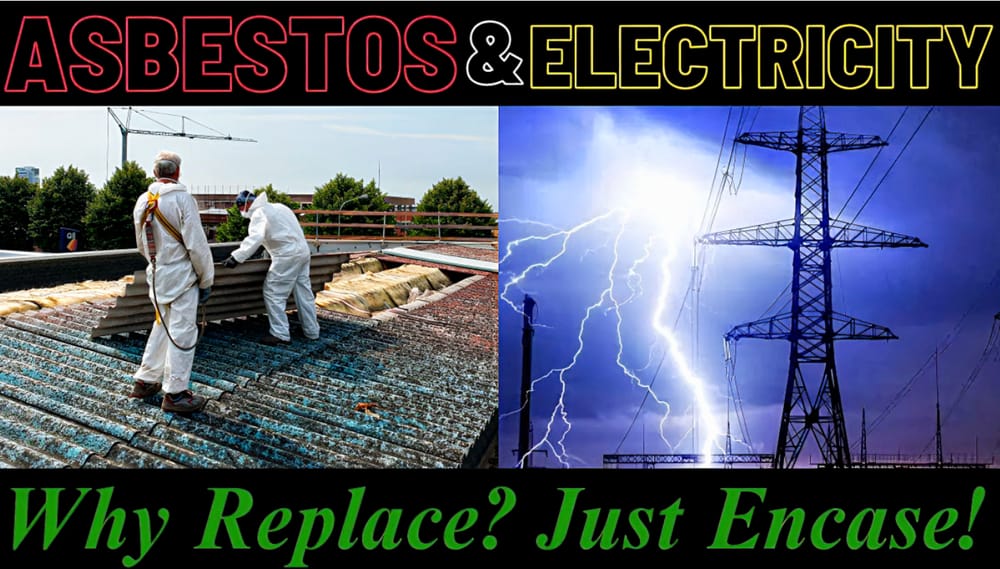
As nice as it would be to just remove all the asbestos in the world along with other things that can be hazardous -it is often not practical or necessary.
More times than not I come across situations where people, companies or institutions don't have the budgets or capabilities to entirely remove and replace asbestos and many times just need to safely manage it in place.
Frequently they are looking for a better way to deal with the potential hazards as well as spend the money in better places such as in schools, buying children's books, desks and improving teachers salaries.
After being an asbestos removal contractor for several years and seeing astronomical budgets that were spent on removing and replacing asbestos, asbestos that was often in good shape, doing what it was supposed to do, I started to wonder if there was a better way.
I would be asked “if we safely deal with other hazards such as electricity why not the same with solid hazardous materials” such as asbestos and lead based paint to name a couple.
These reoccurring issues and questions forced me to look at practical alternatives especially when the money being spent to remove and replace asbestos could be better used on other important things.
So, let's look at comparing the hazards and benefits - pros and cons of both electricity and asbestos and how they can both be safely managed in place.
Electricity and asbestos are two of the most revolutionary inventions in the history of building construction. Both have transformed the way we live and work, and have become integral parts of our daily lives.
However, while electricity has brought about numerous benefits, asbestos has had a darker side, with its harmful effects leading to widespread illness and death. In this blog, we will compare the introduction of electricity and asbestos into buildings, and how they are safely managed today.
The use of electricity in buildings dates back to the late 1800s. Thomas Edison's invention of the incandescent light bulb in 1879 was a game-changer, and soon after, electric power stations were built to provide electricity to buildings. The use of electricity allowed for better lighting, heating, and cooling systems, and greatly improved the quality of life for people living and working in buildings.
Over the years, the use of electricity has become more sophisticated, and today, it is an integral part of building construction. Electric wiring, circuit breakers, and safety switches are just some of the components used in modern electrical systems. However, the use of electricity also comes with risks, such as electrical shock and fire.
Therefore, it is essential to safely manage electrical systems in buildings.
The use of asbestos in buildings also dates back to the late 1800s. Asbestos is a naturally occurring mineral that was found to be fire-resistant and a good insulator. As a result, it was widely used in building construction, particularly in insulation, roofing, and flooring materials.
The use of asbestos became more widespread in the 20th century, and by the 1970s, it was used in almost all aspects of building construction.
However, it was later discovered that asbestos fibers, when inhaled, could cause serious health problems such as lung cancer, mesothelioma, and asbestosis.
The harmful effects of asbestos were not fully understood until the late 20th century, and it wasn't until the 1980s that the use of asbestos was banned in some countries.
Despite this, many older buildings still contain asbestos, and several countries continue to produce and use asbestos in buildings.
It is essential to safely manage it to prevent harm to occupants.
Today, both electricity and asbestos are safely managed in buildings.
Electric wiring and systems are installed and maintained by licensed electricians who adhere to strict safety standards. Building codes and regulations also require that electrical systems meet certain safety standards, including the use of circuit breakers, ground fault interrupters, and smoke detectors.
Asbestos is managed differently. If asbestos-containing materials (ACMs) are present in a building, they must be identified and managed to prevent exposure.
The most common method of managing ACMs is ENCASEMENT/encapsulation, where an approved and tested coating with a proven track record should be applied to the material to prevent the release of fibers.
In conclusion, the introduction of electricity and asbestos into building construction has had a significant impact on the way we live and work.
While electricity has brought about numerous benefits, asbestos has had a darker side, with its harmful effects leading to widespread illness and death.
Today, both electricity and asbestos are safely managed in buildings, and strict safety standards are in place to prevent harm to occupants.
It is essential to continue to educate building owners, occupants, and contractors on the safe management of these important components of building construction.
Here is a summary comparing electricity and asbestos in building construction:
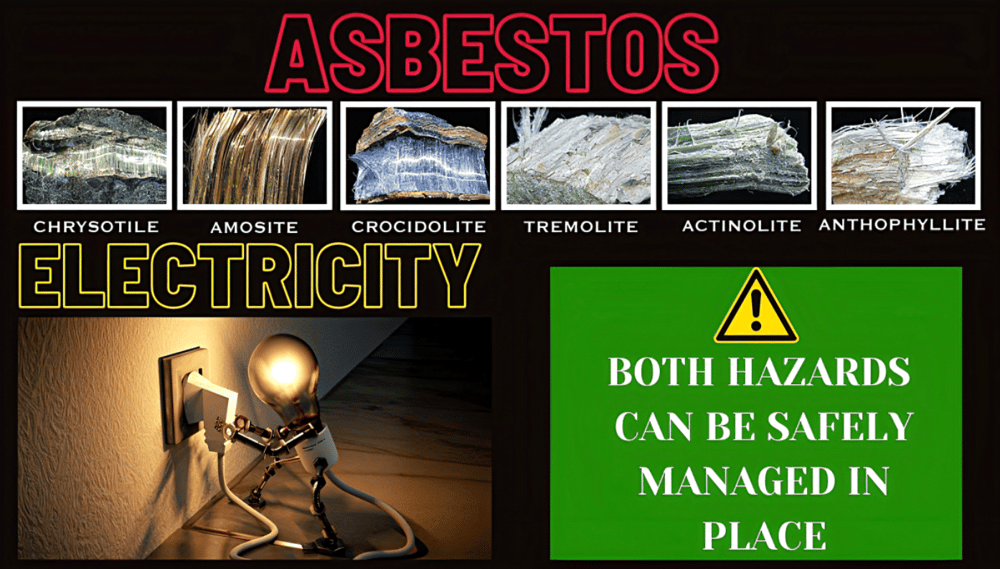
Introduction of Electricity into Buildings:
- Dates back to the late 1800s
- Edison's invention of the incandescent light bulb in 1879 was a game-changer
- Electric power stations were built to provide electricity to buildings
- Improved lighting, heating, and cooling systems, and greatly improved the quality of life for people living and working in buildings
- Today, an integral part of building construction
- Comes with risks such as electrical shock and fire
- Essential to safely manage electrical systems in buildings
Introduction of Asbestos into Buildings:
- Dates back to the late 1800s
- Asbestos is a naturally occurring mineral found to be fire-resistant and a good insulator
- Widely used in building construction, particularly in insulation, roofing, and flooring materials
- Use became more widespread in the 20th century, and by the 1970s, it was used in almost all aspects of building construction
- Later discovered that asbestos fibers, when inhaled, could cause serious health problems such as lung cancer, mesothelioma, and asbestosis
- Harmful effects of asbestos were not fully understood until the late 20th century
- Use of asbestos was banned in some countries by the 1980s
- Many older buildings still contain asbestos
- Essential to safely in-place manage asbestos to prevent harm to occupants
Safely Managing Electricity and Asbestos in Buildings:
- Electric wiring and systems installed and maintained by licensed electricians who adhere to strict safety standards
- Building codes and regulations require electrical systems to meet certain safety standards, including the use of circuit breakers, ground fault interrupters, and smoke detectors
- Asbestos-containing materials (ACMs) must be identified and managed to prevent exposure
- Most common method of managing ACMs is ENCASEMENT/encapsulation, where a coating is applied to the material to prevent the release of fibers
- If the material is damaged or deteriorating, it may need to be properly assessed for the right in-place - management system usually accomplished on a case by case basis.
- Essential to continue to educate building owners, occupants, and contractors on the safe management of these important components of building construction.
For more details on this and other important associated information contact me at: ask@encasementguy.com or call 1-800-228-5507
See other posts like this one:














© Copyright 2026 Global ENCASEMENT, Inc. | ALL Rights Reserved